Not the Same as a Sound Bath
If you've searched for Tibetan singing bowls Hong Kong or singing bowl workshop Hong Kong, you've likely also come across sound bath listings — and it's worth knowing upfront that these are two different things.
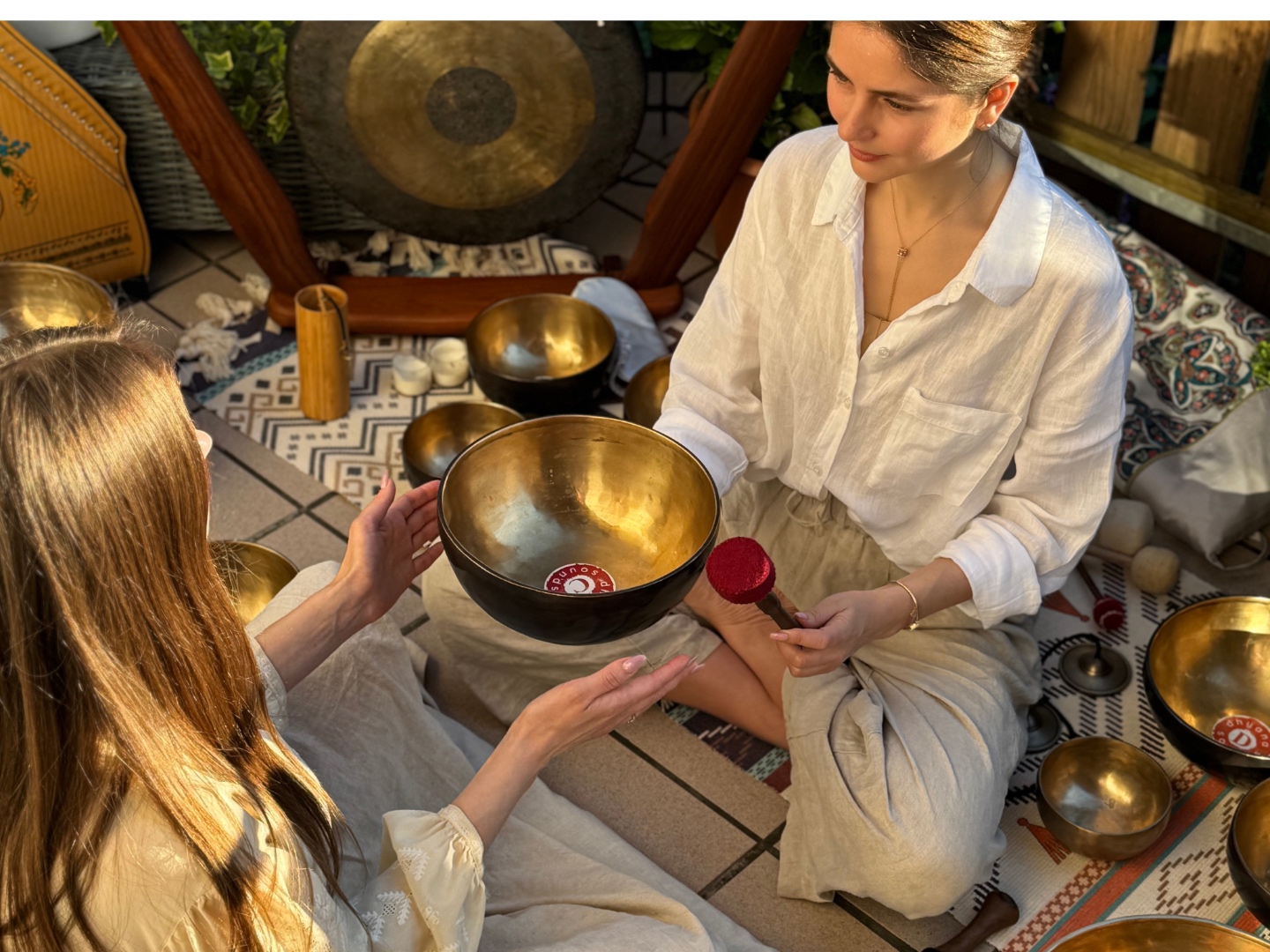
A sound bath is a receiving experience. You lie down, close your eyes, and let the sound move through the room around you. A Tibetan singing bowls workshop is the opposite kind of experience — hands-on, active, and focused on teaching you to actually play the instrument yourself.
At Kate Sound Studio, both are available, but they serve different purposes. This article is about the workshop.
Who a Singing Bowls Workshop Is For
People come to a Tibetan singing bowls workshop for a few different reasons:
- Curiosity about the instrument itself, separate from wanting to receive a session
- A personal meditation or mindfulness practice they want to deepen with sound
- An interest in eventually playing for family, friends, or a small group
- The early stages of exploring sound healing as a practice, whether for themselves or professionally
No musical background is required for any of these. Most people who join a first workshop have never held a singing bowl before.
"A workshop teaches you to make the sound. A sound bath lets you rest inside it. Most people eventually want both."
Tibetan Bowls vs. Crystal Bowls
One of the first things covered in a workshop is the difference between the two main types of bowl used in sound healing Hong Kong practice today.
Tibetan singing bowls are traditionally metal, often a blend of several metals, and are played either by striking the rim with a mallet or by circling a mallet around the rim to produce a sustained, layered tone. Their sound tends to be warm and complex, with multiple overtones.
Crystal singing bowls are made from quartz and produce a purer, more sustained single tone. They're generally played by circling a suede or rubber mallet around the rim, and the sound carries further and holds longer than most Tibetan bowls.
Many practitioners, including at Kate Sound Studio, work with both instruments — Tibetan bowls for warmth and grounding, crystal bowls for clarity and sustain.
How the Levels Build
At Kate Sound Studio, singing bowl workshops are structured across three levels, each building on the one before it.
Level 1 — Foundations
The starting point for complete beginners. Level 1 covers how to hold the mallet, the difference between striking and rimming a bowl, how to select bowls that work well together, and simple sequences you can practice on your own.
Level 2 — Building a Practice
Level 2 moves into layering multiple bowls, working with breath and pacing, and developing a short sequence you could play for yourself as a personal practice — for grounding before sleep, for example, or as part of a morning routine.
Level 3 — Playing for Others
Level 3 is for those who want to move toward guiding a simple session for someone else — a partner, a friend, a small group. It covers structuring a short session from start to finish, reading the room, and pacing sound for someone other than yourself.
Workshops are available privately (1:1) or for two people learning together, so you can move at whichever pace suits you.
What to Bring and What to Expect
No equipment is required — bowls, mallets, and all materials are provided. Comfortable clothing is recommended, and it helps to come without a tight schedule immediately afterward, since many people find the workshop itself unexpectedly calming even though the focus is technique rather than rest.
Learn the instrument yourself
Start Your Singing Bowls Journey
Levels 1 through 3 are available privately or for two people learning together, in a private studio setting in Central. Message via WhatsApp to find the right starting point for you.
Frequently Asked Questions
What is the difference between a singing bowls workshop and a sound bath?
A sound bath is a guided listening experience where you lie down and receive the sound. A singing bowls workshop is hands-on — you learn to hold, strike, and play the bowls yourself, working toward playing for your own practice or for others.
Do I need any musical background to join a Tibetan singing bowls workshop?
No musical background is needed. Workshops are structured from Level 1 for complete beginners through to Level 3 for those working toward facilitating sessions for others.
What is the difference between Tibetan singing bowls and crystal singing bowls?
Tibetan singing bowls are traditionally metal, producing warm, layered overtones and are played by striking or rimming the bowl. Crystal singing bowls are made from quartz and produce a purer, more sustained tone. Many practitioners, including at Kate Sound Studio, work with both.
Can I book a private singing bowls workshop, or is it only in groups?
Both are available. Private 1:1 workshops and small group workshops for two people are offered at Kate Sound Studio, depending on the level and pace you prefer.
What can I do after completing all three levels?
Levels 1 through 3 build from personal practice toward facilitation. By Level 3, many students are equipped to guide simple singing bowl sessions for others, whether informally or as part of their own wellness offering.
Further Reading
You may also enjoy:
- What Is a Gong Bath? A Beginner's Guide to Gong Meditation in Hong Kong
- The Rooftop Reopens: A Season Above Hong Kong's Skyline
- How to Choose the Right Sound Healing Practitioner or Singing Bowl Teacher in Hong Kong
- What Happens During a Private Sound Healing Session in Hong Kong?
For further research:
- National Center for Complementary and Integrative Health (NCCIH) – Meditation and Mindfulness
- Harvard Health – Mindfulness and Wellbeing
Learn to Play in Hong Kong
Whether you're drawn to the meditative side of sound or thinking ahead to guiding others, a Tibetan singing bowls workshop is a practical, hands-on place to start.
Levels 1 through 3 are available privately or for two, in a private studio setting in Central, Hong Kong.