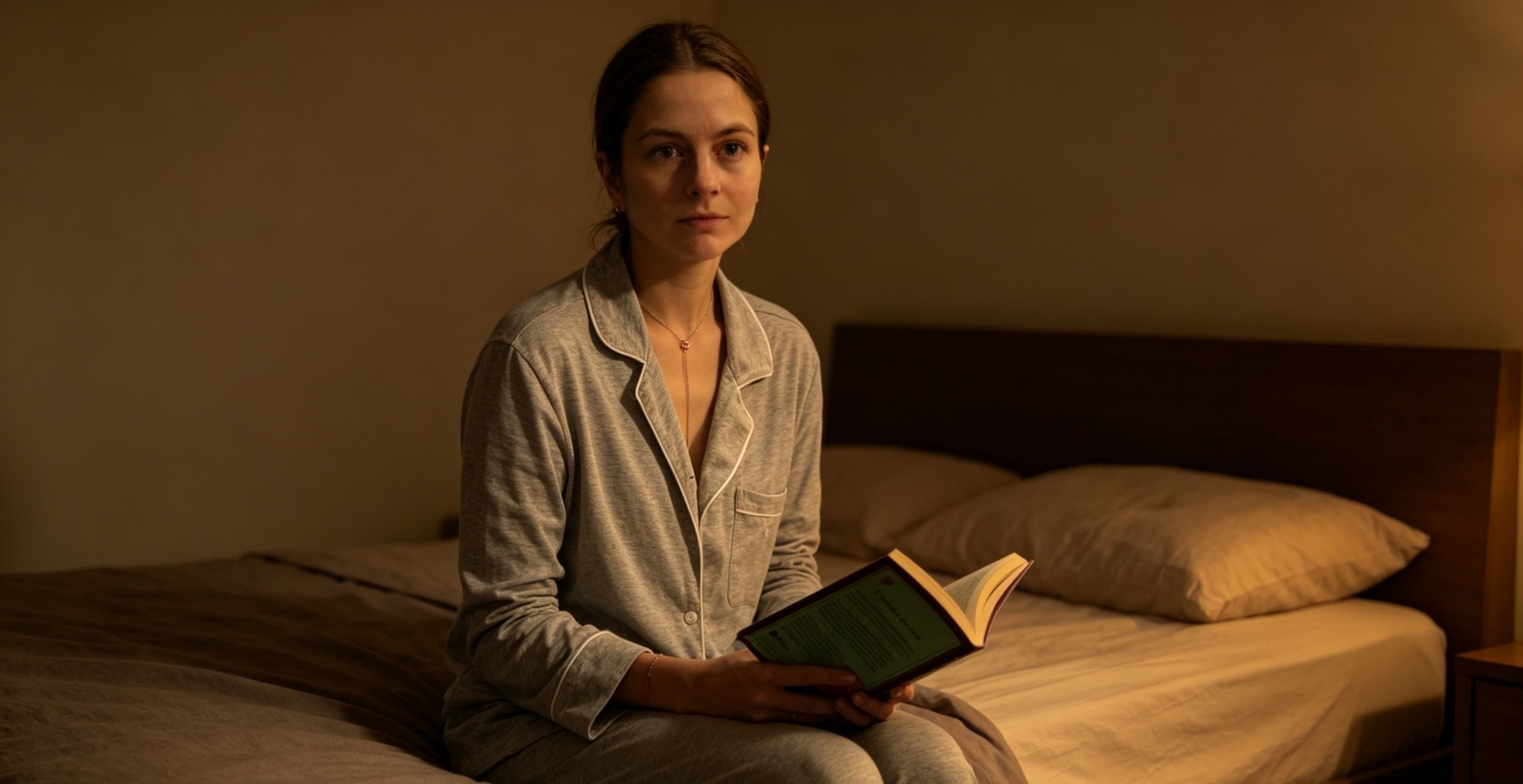
A City That Doesn't Switch Off
Hong Kong runs late, works hard, and rarely goes fully quiet. If you're lying awake at midnight scrolling through why-can't-I-sleep searches, you're not unusual — you're responding normally to an environment that keeps low-grade stress signals running well past the hour your body wanted to wind down.
Mind HK, a Hong Kong mental health charity, describes a close relationship between sleep and mental health: poor sleep can make people more likely to feel anxious, and anxiety can bring racing, repetitive thoughts that keep someone awake (Mind HK, 2026).
What's Actually Happening When Sleep Won't Come
Poor sleep is rarely just a bedtime problem. It's usually a nervous system that's still in an alert, activated state from the day — work stress, screen exposure, or unresolved anxious thoughts that haven't had anywhere to go.
The body doesn't switch from alert to rested just because it's dark. It needs a genuine down-shift, which is exactly what most evening routines skip in favor of one more email or one more episode.
Non-Medication Options Worth Understanding
Mindfulness-based approaches have a growing evidence base for easing the anxious thinking that keeps sleep just out of reach. Harvard Health, reporting on a research review, notes that mindful meditation can help ease psychological stresses such as anxiety, and can help people see unproductive worries as thoughts rather than facts (Harvard Health, 2026).
On sleep specifically, the U.S. National Center for Complementary and Integrative Health notes that mindfulness meditation may help reduce insomnia and improve sleep quality. It also notes that it did not outperform established treatments such as cognitive behavioral therapy, and that these practices are usually considered to have few risks, although research on possible harms is limited (NCCIH, 2026).
Sound-based practices — including guided sessions using Tibetan singing bowls — work on a similar principle: giving the nervous system an external cue to slow down, paired with breath and stillness, rather than asking the mind to simply try harder to relax.
What This Looks Like in Practice
A private sound and mindfulness session isn't a sleep aid you take once. It's a practice that trains your nervous system to recognize the difference between “wound up” and “winding down,” so that state becomes easier to reach on your own, including at bedtime.
This kind of session can complement — never replace — professional care. If sleep difficulty is severe, persistent, or paired with significant anxiety, a conversation with a doctor or licensed counsellor in Hong Kong is the right first step.
Private sound and mindfulness sessions
Wind Down With Support
One-to-one sessions in Central, Hong Kong, designed to help your nervous system slow down. Message us on WhatsApp to find a time that suits you.
Frequently Asked Questions
Why can't I sleep even when I'm exhausted?
Exhaustion and an activated nervous system can coexist — being tired doesn't mean your body has downshifted out of alert mode, which is what actually allows sleep to come.
Is meditation actually proven to help with sleep?
It may help. NCCIH notes that mindfulness meditation may help reduce insomnia and improve sleep quality, though it has not been shown to work better than established treatments such as cognitive behavioral therapy. If sleep problems persist, talk to a doctor.
How is a sound session different from meditation apps?
A guided, in-person session provides an external structure and pacing that's harder to replicate alone, along with physical vibration from the bowls that many people experience as more grounding.
When should I see a doctor instead of trying wellness practices?
If sleep difficulty is severe, persistent for weeks, or paired with significant anxiety or low mood, speak with a doctor or licensed counsellor first — wellness practices work best alongside professional care, not instead of it.
Further Reading
You may also enjoy:
- Why Hong Kong's Rainy Season Can Leave You Feeling Tired, Unmotivated, and Mentally Drained
- How Sound Therapy Can Help with Anxiety, Overthinking, and Poor Sleep
Sources
- Mind HK: About sleep and mental health
- Harvard Health: Mindfulness meditation may ease anxiety, mental stress
- NCCIH: Meditation and mindfulness: what you need to know (effectiveness and safety)
This article is general information, not medical advice. A private session can complement, not replace, care from a doctor or licensed counsellor.