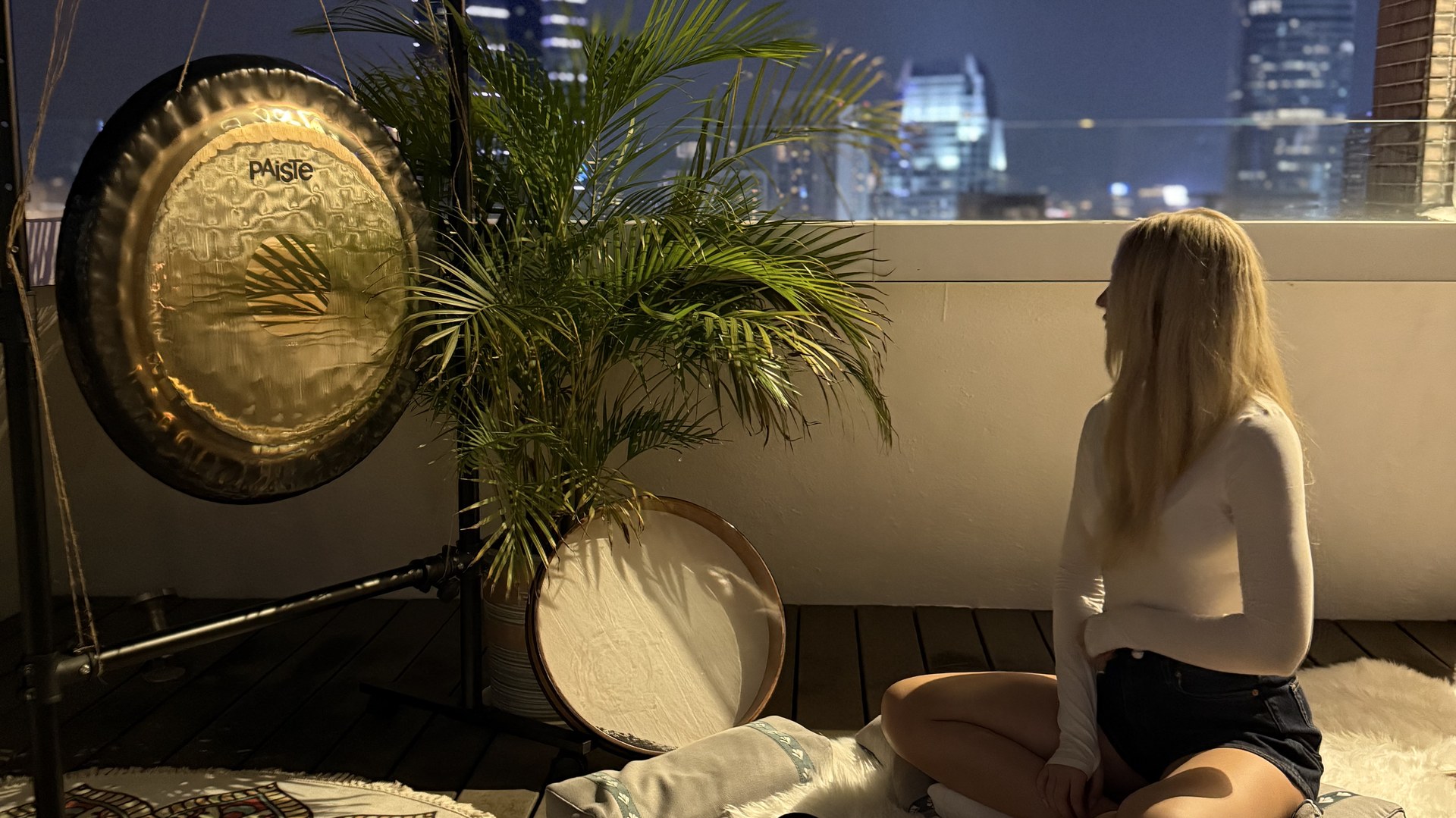
Experience a Sound Reset Under the Open Sky
Have you ever noticed yourself feeling more emotional, sensitive, restless, or mentally overwhelmed around the full moon?
You are not alone.
During every full moon, many people report:
- Difficulty sleeping
- Heightened emotions
- Anxiety or overthinking
- Feeling unusually drained
- Increased sensitivity
- Stronger emotional reactions
While the full moon is often discussed spiritually, there are also practical reasons why periods of heightened stimulation and disrupted sleep can affect the nervous system and emotional regulation.
At Kate Sound Studio, I often notice that clients feel more emotionally activated in the days leading up to the full moon — especially those already dealing with stress, anxiety, burnout, or emotional overwhelm.
Why the Full Moon May Affect Emotions and Sleep
Research around the moon's direct effect on human behavior is still evolving, but several studies suggest that sleep quality may change during the full moon cycle.
What the research shows
A study published in Current Biology found that participants experienced reduced deep sleep, a longer time to fall asleep, and lower melatonin levels during the full moon phase.
The Sleep Foundation also discusses how moon phases may influence sleep quality and circadian rhythms.
When sleep becomes lighter or more disrupted, emotional regulation can also become more difficult. This may explain why many people feel more reactive, more anxious, more emotional, or more mentally overstimulated around the full moon.
The Nervous System and Emotional Sensitivity
When the nervous system is already under stress, even small disruptions can feel amplified. People living with overwork, anxiety, emotional suppression, or mental overstimulation may notice stronger reactions during emotionally charged periods such as the full moon.
The body can shift more easily into fight-or-flight mode, making it harder to relax or process emotions calmly.
The Cleveland Clinic explains how stress and nervous system dysregulation can affect emotional balance and overall wellbeing.
The Full Moon Can Also Amplify Positive Emotions
Interestingly, the full moon does not only amplify stress or emotional heaviness.
If you are feeling grounded, calm, connected, inspired, or in love, that emotional state may also feel stronger during this time. Many people notice:
- Increased inspiration
- Greater emotional openness
- Stronger intuition
- More gratitude
- A deeper sense of connection
- More energy and creativity
"The energy we cultivate internally often feels amplified during this period."
That is one reason why I personally try to be especially mindful around the full moon — paying attention to my thoughts, emotional state, and the people and environments I surround myself with.
Why Old Emotions Sometimes Resurface
Many people describe the full moon as emotionally "intense." In practice, what often happens is that the body becomes quieter at night, and emotions that were previously buried under busyness or distraction become easier to feel.
This can appear as unexpected sadness, irritability, emotional release, overthinking, or feeling more sensitive in relationships.
Rather than seeing this as something negative, it can be viewed as an opportunity to slow down and reconnect with yourself.
What You Can Do During the Full Moon
1
Prioritize Sleep
Try to reduce stimulation before bed: limit screen time, avoid heavy meals late at night, and create a calmer evening routine.
2
Slow Down
The full moon is not always the best time to overload your schedule. Give yourself moments of quiet and reflection.
3
Practice Breathwork or Meditation
Slow breathing helps regulate the nervous system and calm mental activity. The National Center for Complementary and Integrative Health notes that mindfulness and meditation may help reduce stress and improve emotional wellbeing.
4
Journal or Reflect
Emotions often become clearer when written down rather than held internally.
5
Spend Time in Nature
Even a short walk outdoors can help ground the body and reduce overstimulation.
6
Experience a Sound Reset
Immersive sound using Tibetan singing bowls and gongs can help quiet the mind and support nervous system recovery. Many clients report feeling emotionally lighter, sleeping more deeply, and experiencing reduced overthinking after sessions.
Research
A study published in PubMed found that singing bowl meditation was associated with reduced tension, anger, and fatigue.
Full Moon · Small Group · By Invitation
Full Moon Sound Reset Sessions in Hong Kong
At Kate Sound Studio, I host monthly small-group Full Moon Sound Reset sessions for just 3–5 people, by invitation only, as well as private 1:1 sessions tailored to your emotional and nervous system needs. Sessions combine Tibetan singing bowls, symphonic gongs, guided meditation, breathwork, and mindfulness practices.
Final Thoughts
The full moon does not "cause" emotions — but it may amplify what is already asking for attention.
And that amplification can be both challenging and beautiful.
If stress, exhaustion, or emotional overwhelm are already present, they may feel stronger. But if you are grounded in calm, love, gratitude, or connection, those feelings may deepen too.
Sometimes the most powerful thing we can do during the full moon is simply slow down, become more mindful, and give the nervous system space to reset.
More from Kate Sound Studio
If this article was useful, you might also enjoy: