Why the Wrong Questions Lead to the Wrong Vendor
A wellness booking that looks good on the calendar can still miss what a team needs. In our experience, the gap usually traces back to the questions asked during vendor selection, or not asked.
The Asia-Pacific corporate wellness market is projected to reach US$29.37 billion by 2033, yet only about 5% of workers in the region currently have access to formal emotional wellness infrastructure. The same report names “emotional infrastructure” as a key trend, with employers redesigning environments to support nervous system regulation and emotional capacity (FutureIoT, 2026).
Start With Fit, Not Features
Before asking what a vendor offers, ask what problem you're actually solving. A team drowning in back-to-back meetings needs something restorative. A team that's socially disconnected after a shift to hybrid work needs something that rebuilds connection. The same vendor rarely solves both well.
A useful early question: “What does this format ask of my team?” Some wellness offerings are subtly demanding — they require performance, participation, or physical exertion. For teams already running on empty, that can add pressure rather than relieve it.
The Practical Questions Worth Asking Every Vendor
- How is the session structured, start to finish, and how long does it actually take? Vague answers here usually mean an unstructured format.
- What's the group size this works best for? A format built for 200 people rarely lands the same way for a team of eight, and vice versa.
- Can it happen at our office, or only at an external venue? Logistics are worth settling before you commit.
- What happens if someone has no prior experience with this kind of session? The answer should be specific, not just “don't worry.”
- Is there a way to see or experience a short version before committing to a full team booking?
A Simple Way to Evaluate the Shortlist
Shortlister's 2025 workplace wellness trends report describes vendor procurement as often lengthy, needing a deeper evaluation of not just cost and features but also alignment with organizational goals, scalability, and long-term value (Shortlister, 2025).
A short scorecard works well: fit to the actual problem, clarity of session structure, logistics flexibility, and evidence the format has worked for teams your size before.
Corporate programs
Experience a Short Session First
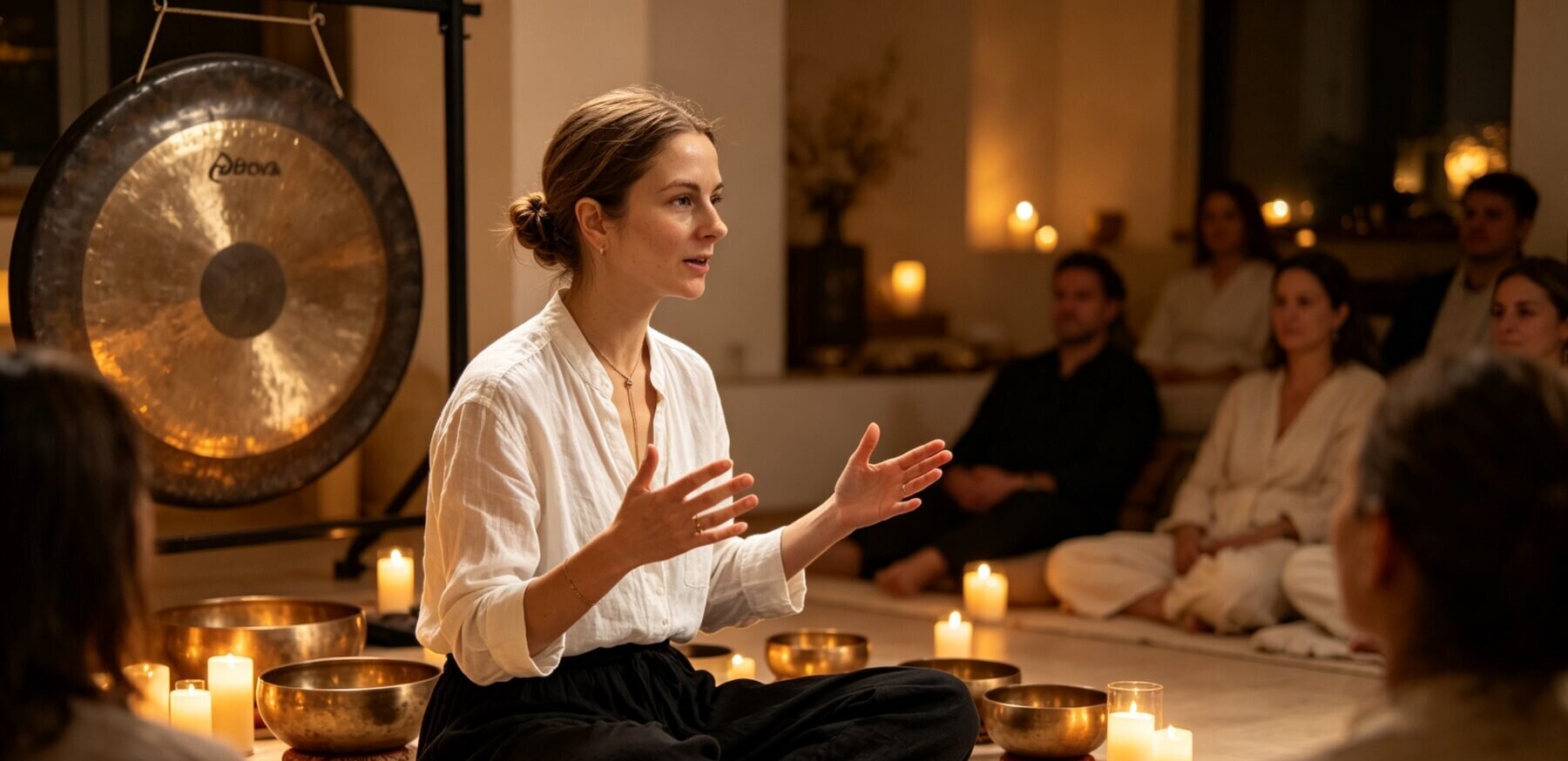
We run sound and mindfulness sessions for teams in Hong Kong, at your office or ours. Tell us about your team and the problem you want to solve, and we will suggest a format that fits.
Frequently Asked Questions
What's the biggest mistake HR teams make when booking wellness vendors?
Choosing a vendor based on novelty or price before clarifying what specific problem the team needs solved — restoration, connection, or something else entirely.
How do I know if a wellness format is right for a stressed team?
Ask what the format asks of participants. If it requires performance or exertion, it may add pressure rather than relieve it for a team already running on empty.
Should wellness sessions happen at the office or off-site?
Either can work. The right question is whether the vendor can flexibly accommodate your space, since logistics can make or break a booking.
How many employees should join a single wellness session?
This depends on the format. Restorative, passive sessions like guided sound and mindfulness work best kept small and private rather than scaled to large groups.
Further Reading
You may also enjoy:
- Corporate Wellness Hong Kong: Why a Sound Session Beats a Standard Team Event
- Corporate Wellness in Hong Kong: Sound Resets, Meditation, and Stress-Relief for Teams
Sources
- FutureIoT: Workplace Wellness Calls for a Human-Centred Reset
- Shortlister: Workplace Wellness Trends Report 2025
This article is general information to help with vendor selection. Session formats and availability are confirmed directly with Kate Sound Studio.