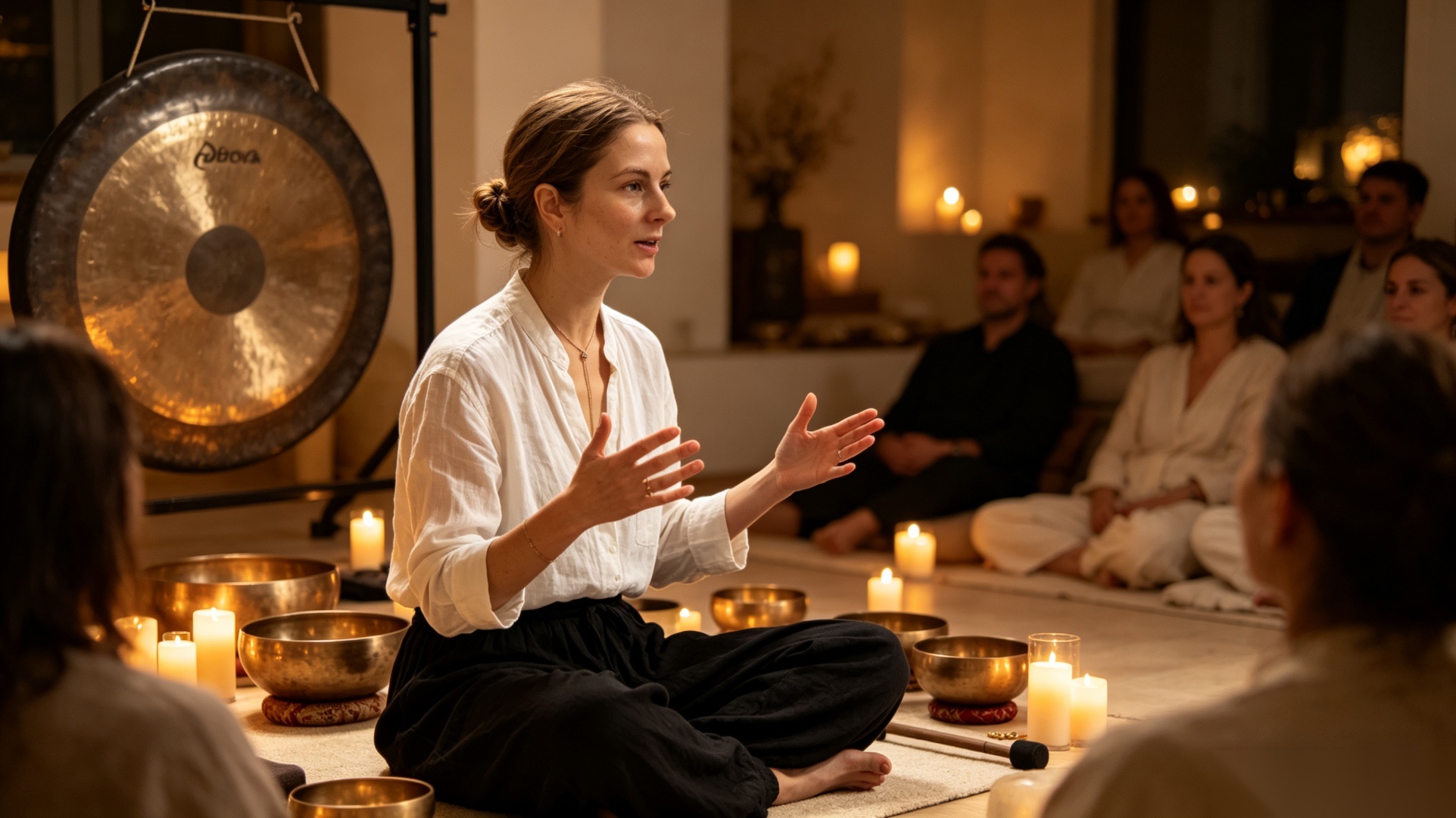
Over the past year, I have noticed more and more professionals coming to my sessions in Hong Kong — founders, bankers, consultants, lawyers, creatives, executives.
On the outside, many of them appear successful, driven, and high-functioning. But behind that, I often hear the same things:
And honestly, I understand that feeling deeply — because I came from a corporate background myself. I remember periods when I was sleeping, but not truly resting. I was constantly mentally "on," easily irritated, emotionally overwhelmed, and disconnected from myself without even fully realising it.
I also remember listening — but not really hearing. Conversations became background noise because my mind was already thinking about the next task, the next email, the next problem to solve.
"At the time, I thought stress was simply part of being ambitious and productive. Only later did I understand what chronic nervous system overload actually feels like in the body."
That personal experience is one reason why I became deeply interested in meditation, mindfulness, and sound-based practices — not as an escape from life, but as a way to reconnect with balance, presence, and clarity again.
At Kate Sound Studio, most people initially come because they want to reduce stress, improve sleep, and finally experience a quieter mind.
Why Traditional Rest Often Is Not Enough
Many high-performing people know how to work hard, but not necessarily how to recover deeply. Even after:
- Vacations
- Weekends off
- Massages
- Watching Netflix
- Scrolling social media
...the nervous system may still remain overstimulated. A lot of clients describe feeling "tired but wired" — mentally overloaded, emotionally disconnected, unable to truly rest.
This happens because stress is not only mental. It is physiological. The body can remain in fight-or-flight mode for long periods of time.
Research & Evidence
The Cleveland Clinic explains how chronic stress affects the nervous system and why intentional relaxation practices — including breathwork and mindfulness — are important for meaningful recovery. When the body remains in fight-or-flight, simply taking time off is rarely enough to restore balance.
Why Meditation Is Becoming More Popular
I think one reason meditation is becoming more popular in corporate culture is because people are deeply overstimulated. We are constantly consuming:
- Information
- Emails and notifications
- News and social media
- Conversations and pressure
Many people rarely experience true stillness anymore. Meditation creates a space where the mind can slow down and the nervous system can begin to regulate.
Research & Evidence
The National Center for Complementary and Integrative Health (NCCIH) notes that meditation and mindfulness may help reduce stress and improve overall wellbeing, with a growing body of clinical research supporting their use across a range of physical and emotional symptoms.
Why Sound Therapy Feels Different
A lot of clients tell me they tried meditation apps before coming to a session. Some enjoyed them, but many struggled with silence because their minds felt too active. That is where sound can help.
Using Tibetan singing bowls, crystal bowls, and symphonic gongs, the sound gently gives the mind something to focus on. Many clients say:
- "This is the first time my mind became quiet."
- "I finally felt my body relax."
- "I slept deeply for the first time in months."
The vibrations and frequencies help shift attention away from constant thinking and into a calmer, more present state.
Peer-Reviewed Research
A study published in PubMed (Journal of Evidence-Based Integrative Medicine) found that Tibetan singing bowl meditation was associated with significantly reduced tension, anxiety, anger, fatigue, and depressed mood — with effects measurable even after a single session, and particularly notable among first-time participants.
High Performance Also Requires Recovery
I think many professionals are beginning to realise that sustainable performance is not only about pushing harder. Recovery matters too.
When the nervous system is constantly overloaded, it becomes difficult to:
- Think clearly
- Sleep deeply
- Stay emotionally balanced
- Be creative
- Feel present
"Practices such as meditation, breathwork, and immersive sound can help create moments where the body finally feels safe enough to relax. And often, that is when clarity returns."
Why Hong Kong Professionals Especially Need This
Hong Kong is one of the most dynamic cities in the world, but it is also incredibly stimulating. Many clients tell me they rarely experience:
- Silence
- Deep rest
- Time without notifications
- Space to simply breathe
That is why intentional pauses become so important. Even one hour of guided relaxation and immersive sound can help the nervous system reset in a meaningful way.
My Approach at Kate Sound Studio
At Kate Sound Studio, I combine:
- Tibetan singing bowls
- Symphonic gongs
- Guided meditation
- Breathwork
- Nervous system-focused relaxation techniques
Sessions are designed to feel grounded, elegant, non-religious, science-informed, and accessible — even for complete beginners. Many professionals appreciate that the sessions are private, calming, and adapted to what they personally need.
Corporate Wellness and Team Resets
Alongside private sessions, I also work with companies and teams in Hong Kong through corporate wellness experiences. These sessions are designed to help employees:
- Reduce stress and improve focus
- Recover from burnout
- Feel more emotionally balanced
- Reconnect as a team
Corporate sound resets and meditation sessions are increasingly becoming part of wellness weeks, team offsites, leadership retreats, brand activations, and employee wellbeing programs.
Book a Session
Ready for a real reset?
Private sessions and corporate wellness programs available across Hong Kong. Sessions are calming, grounded, and adapted to what you personally need.
Final Thoughts
I do not think the growing interest in meditation and sound therapy is just a trend. I think it reflects something many people deeply need right now: space to slow down, breathe, and reconnect with themselves.
Sometimes the most productive thing we can do is pause long enough for the mind and nervous system to reset.
More from Kate Sound Studio
If this article was useful, you might also enjoy: