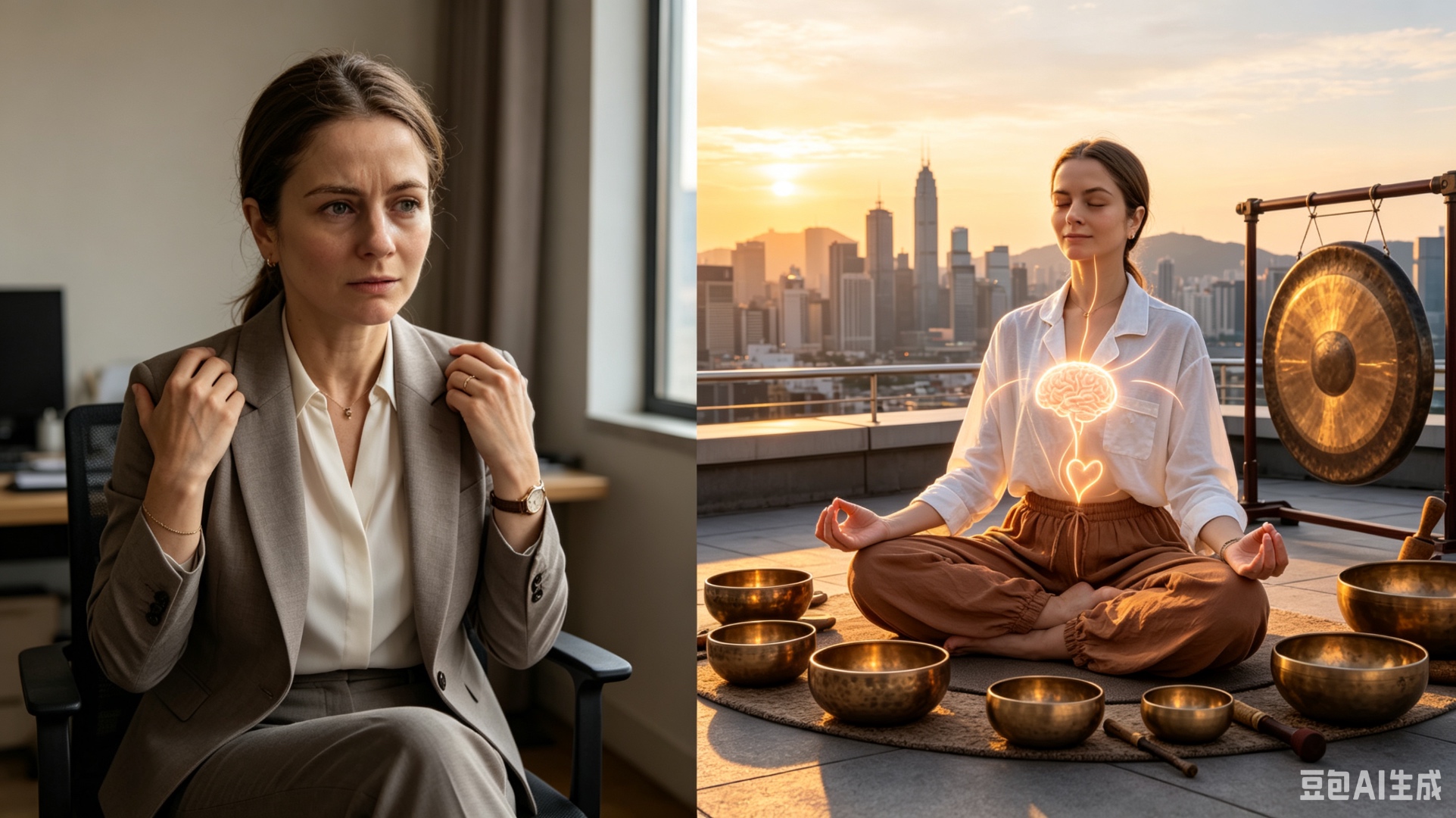
Do you often feel anxious, mentally overactive, or unable to fully relax — even when there is no obvious reason?
Many people live in a constant state of stress without realising it. Poor sleep, digestive discomfort, racing thoughts, and a persistent sense of tension are often signs that the nervous system is spending too much time in fight-or-flight mode.
Learning how to regulate your nervous system can help you feel calmer, think more clearly, and sleep more deeply.
At Kate Sound Studio, I combine Tibetan singing bowls, gongs, breathwork, and mindfulness practices to help clients shift out of stress mode and into a more balanced state.
Understanding the Stress Response
The autonomic nervous system has two main branches.
Sympathetic Nervous System (Fight or Flight)
This is the body's natural survival response. When the brain detects a threat, it releases stress hormones such as cortisol and adrenaline.
Common effects include:
- Faster heart rate
- Shallow breathing
- Muscle tension
- Heightened alertness
- Reduced digestion
- Anxiety and racing thoughts
This response is essential in dangerous situations, but it is designed to be temporary.
Parasympathetic Nervous System (Rest and Digest)
This branch helps the body recover and restore. When activated, you may notice:
- Slower breathing
- Better digestion
- Improved sleep
- Reduced muscle tension
- Greater emotional balance
The vagus nerve plays a key role in this calming response. The Cleveland Clinic explains that breathing, movement, and relaxation practices can help stimulate the vagus nerve and support nervous system regulation.
What Is Cortisol?
Cortisol is the body's primary stress hormone. It helps regulate:
- Energy levels
- Blood sugar
- Inflammation
- The sleep-wake cycle
Cortisol itself is essential. The issue arises when levels remain elevated for long periods due to chronic stress.
Persistently high cortisol may contribute to:
- Trouble sleeping
- Anxiety
- Brain fog
- Digestive issues
- Reduced immune function
- Weight gain
The goal is not to eliminate cortisol, but to help your body return to a healthy rhythm.
Signs Your Nervous System May Be Dysregulated
You may benefit from nervous system support if you often experience:
- Feeling "wired but tired"
- Difficulty relaxing
- Frequent overthinking
- Tight shoulders or jaw
- Digestive discomfort
- Sensitivity to noise
- Mood swings
- Insomnia
These symptoms suggest that the body may be spending too much time in a state of alertness.
How to Calm Your Nervous System Naturally
1. Slow Breathing
Breathing with a longer exhale sends a signal of safety to the brain. Try:
- Inhale for 4 seconds
- Exhale for 6 seconds
- Repeat for 5–10 minutes
2. Mindfulness Meditation
Mindfulness helps train the mind to observe thoughts rather than react to them automatically. The National Center for Complementary and Integrative Health (NCCIH) notes that meditation may help reduce stress and improve overall well-being.
3. Gentle Movement
Walking, yoga, and stretching help release stored tension from the body.
4. Time in Nature
Even a short walk outdoors can reduce mental overstimulation and lower cortisol levels.
5. Quality Sleep
Consistent sleep is one of the most powerful ways to regulate cortisol and restore the nervous system.
6. Sound Therapy
Tibetan singing bowls and gongs create soothing vibrations that can help quiet the mind and encourage deep relaxation. A study published in PubMed found that participants reported reduced tension, anger, and fatigue after a singing bowl meditation session.
How Sound Therapy Supports Nervous System Regulation
During a sound session, the combination of vibration, mindful breathing, and guided meditation can help the body shift from a state of stress into a more restorative mode.
"Sound therapy creates an environment in which the nervous system can feel safe enough to let go."
Clients often report:
- A calmer mind
- Reduced physical tension
- Emotional release
- Better sleep
- Greater mental clarity
What the research says
A study published in PubMed found that participants reported significantly reduced tension, anger, and fatigue following a singing bowl meditation session — with effects measurable after a single experience.
Final Thoughts
If you feel like your body is always "on," your nervous system may be asking for support.
Through simple practices such as breathing, meditation, movement, and immersive sound, you can gradually teach your body that it is safe to relax.
And for many people, that shift changes how they sleep, think, and experience everyday life.
Experience it yourself
Experience a Private Sound Session in Hong Kong
At Kate Sound Studio, I offer private rooftop sound experiences designed to support stress relief, nervous system regulation, better sleep, and emotional balance. Each session combines Tibetan singing bowls, gongs, guided meditation, and breathwork in a calm, private setting.
More from Kate Sound Studio
If this article was useful, you might also enjoy: